Results with TRUTAKNA
Reduced levels of protein in the urine
In a clinical study, 106 people with IgA nephropathy (IgAN) received TRUTAKNA and 97 received placebo for 36 weeks
During the study, people taking RASi medications (including ACE inhibitors and ARBs) with or without SGLT2i therapies continued those medications while also taking TRUTAKNA or placebo.
The study measured proteinuria, a sign of worsening kidney damage
The main goal of the study was to see whether TRUTAKNA could lower protein in the urine compared with placebo.
This was measured with a 24-hour urine protein-creatinine ratio (UPCR), a test healthcare providers use to measure protein in the urine and help evaluate kidney health.
The clinical study is ongoing in order to continue evaluating the effects of TRUTAKNA on kidney function
At 36 weeks, more than 90% of people taking TRUTAKNA continued participating in the study.
Define:
TRUTAKNA significantly lowered levels of proteinuria
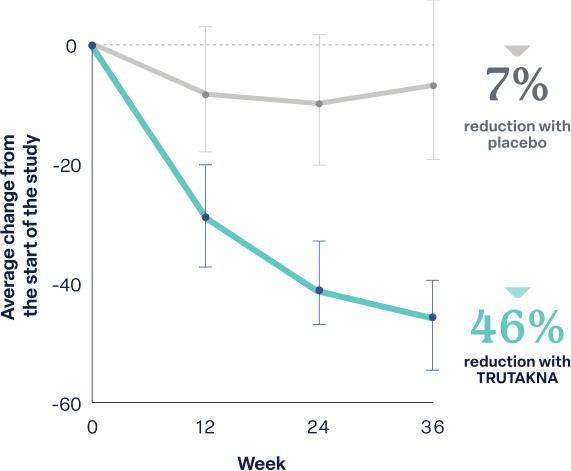
After 36 weeks, TRUTAKNA had lowered protein in the urine when added to supportive care treatments.*
Levels lowered by an average of
46%
in 106 people taking TRUTAKNA
VS
Levels lowered by an average of
7%
in 97 people taking placebo

Percent Change in Proteinuria Levels

*
Supportive care treatments included RASi (including ACE inhibitors and ARBs) with or without SGLT2i therapies.
ACE=angiotensin-converting enzyme; ARBs=angiotensin receptor blockers; IgA=immunoglobulin A; RASi=renin-angiotensin system inhibitor; SGLT2i=sodium-glucose cotransporter-2 inhibitor.
Start the conversation
Use the Shared Decision Guide to help you discuss TRUTAKNA with your healthcare provider


Safety results with TRUTAKNA
Learn about common side effects people experienced while taking TRUTAKNA in a clinical study
INDICATION AND IMPORTANT SAFETY INFORMATION
What is TRUTAKNA?
TRUTAKNA (atacicept-vymj) is a prescription medicine used to reduce levels of protein in the urine (proteinuria) in adults with a kidney disease called primary immunoglobulin A nephropathy (IgAN), who are at risk of their disease getting worse.
It is not known if TRUTAKNA is safe and effective in children.
TRUTAKNA is approved based on reduction of proteinuria. Continued approval may depend on results from an ongoing study to determine whether TRUTAKNA slows decline in kidney function.
IMPORTANT SAFETY INFORMATION
Who should not take TRUTAKNA?
Do not take TRUTAKNA if you are allergic to atacicept-vymj or any of the ingredients in TRUTAKNA. Get emergency help if you develop signs and symptoms of an allergic reaction, including:
breathing problems
swelling of the face, eyes, lips, tongue, or throat
dizziness or lightheadedness
itching
hives
skin rash
Before using TRUTAKNA, tell your doctor about all your medical conditions, including if you:
have or think you have an infection or have infections that keep coming back.
have recently received or are scheduled to receive an immunization (vaccine). TRUTAKNA may affect your immune system response to vaccines and increase your risk of an infection from live vaccines.
You should be brought up to date with all vaccines before starting treatment with TRUTAKNA.
You should not receive live vaccines within 30 days before starting or during treatment with TRUTAKNA.
are pregnant or plan to become pregnant. It is not known if TRUTAKNA will harm your unborn baby. If you become pregnant during treatment with TRUTAKNA, you and your healthcare provider should call 1-833-633-8372.
are breastfeeding or plan to breastfeed. It is not known if TRUTAKNA passes into your breastmilk. Talk to your healthcare provider about the best way to feed your baby if you take TRUTAKNA.
Tell your doctor about all the medicines you take, including prescription and over-the-counter medicines, vitamins, and herbal supplements. Using TRUTAKNA with certain medicines may increase your risk of infections.
What are the possible side effects of TRUTAKNA?
TRUTAKNA can cause serious side effects, including:
Immunosuppression and increased risk of infections: TRUTAKNA weakens your immune system, which may increase your risk of infections. Your healthcare provider will check you for signs and symptoms of infections before you start and during treatment with TRUTAKNA. Tell your healthcare provider right away if you develop any signs or symptoms of infection, including:
fever
chills
feeling tired
cough
flu-like symptoms
aches and pains
warm, red, or painful skin
The most common side effects of TRUTAKNA include: upper respiratory tract infection and injection site reactions, such as redness, swelling, itching or skin irritation at the injection site. Your healthcare provider may interrupt treatment with TRUTAKNA if you have serious side effects.
These are not all the possible side effects of TRUTAKNA. Call your doctor for medical advice about side effects.
You may report side effects to the FDA at 1-800-FDA-1088 or www.fda.gov/medwatch. You may also report side effects to Vera Therapeutics at 1-833-MED-VERA or medinfo@veratx.com.
Please see Full Prescribing Information, including Patient Information.